Responding to a Supply Chain Attack: The ClawHavoc Campaign
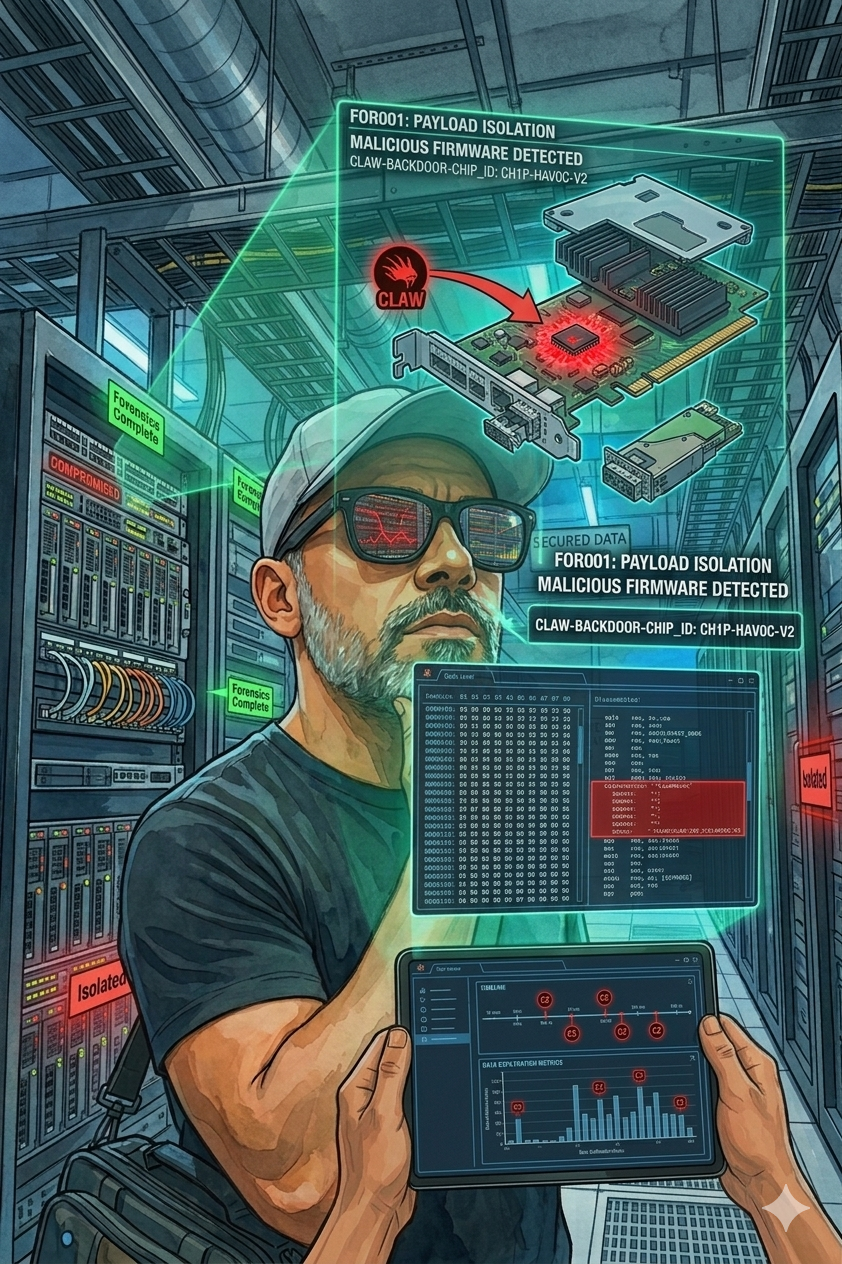
In February 2026, security researchers disclosed a coordinated supply chain attack against ClawHub, the skill marketplace for OpenClaw — the AI agent framework I use to run my homelab's automation. The campaign, dubbed ClawHavoc, planted somewhere between 341 and 900+ malicious skills designed to steal SSH credentials, crypto wallet keys, and browser passwords. On macOS, the payload was Atomic Stealer (AMOS). On Windows, a credential harvester. Both phoned home to the same command-and-control infrastructure.
I run four AI agents through OpenClaw on my homelab — Nyx, Prometheus, Ares, and Aegis — so this wasn't a theoretical risk. It was time for a full audit.
## Starting With the Attacker's Question
The first thing I needed to know: had I ever installed anything from the ClawHub marketplace itself? That's where the malicious skills lived.
I checked the actual install directory — `~/.openclaw/skills/` — where ClawHub registry installs land. It was empty. I'd never pulled a single skill from the marketplace. Every skill running on Nyx had been custom-built by hand or sourced directly from a verified upstream CLI tool, installed via Homebrew from known publishers.
I went through all seventeen active skills one at a time, tracing each one back to its source. Custom scripts I'd written myself. Verified package managers. Nothing from the compromised marketplace. Zero exposure.
There was a second vulnerability tied to the same disclosure — CVE-2026-25253, a one-click remote code execution flaw via WebSocket hijacking that could be exploited even against localhost connections, with a CVSS score of 8.8. The fix was simpler than the audit: update OpenClaw to the patched version and move on.
## The Real Problem Was Somewhere Else Entirely
While I was in the middle of that audit, I discovered Atlas — my actual homelab server — was completely unreachable. Not slow, not degraded. Zero response on any network path. A full power cycle was the only way back in.
Once it came back up, three containers had failed to restart cleanly: Grafana, qBittorrent, and one of my security monitoring tools. Grafana had hit a Go runtime panic from a boot-order race condition. qBittorrent's VPN container, Gluetun, had hit a similar timing issue. The third had a stale PID file left behind from the crash, buried inside Docker's overlay2 filesystem layer. I had to trace it down using `docker inspect` to find the exact upper directory, then manually delete the stale file before the container would start again.
All three came back clean after that.
## A Second, Unrelated Vulnerability Surfaces
While I had the hood open, I found something else worth fixing immediately: CVE-2026-31431, nicknamed "Copy Fail," a local privilege escalation vulnerability affecting every Linux kernel since 2017, actively being exploited in the wild at the time. It worked through the `algif_aead` kernel module.
The module wasn't loaded on Atlas, which meant I wasn't immediately vulnerable, but I wasn't taking chances. I wrote a modprobe block to disable it outright, then ran a full kernel upgrade — from 6.17.13-6-pve to 7.0.2-2-pve, the patched build. Proxmox itself got bumped to 9.1.9 in the same pass, which also happened to resolve a separate CERT-Bund XSS advisory I'd been tracking.
## What This Incident Reinforced
None of this happened because of a single mistake. It happened because I treat infrastructure security as an ongoing practice, not a one-time setup. The ClawHavoc audit took time precisely because I went skill-by-skill instead of assuming I was fine. The kernel patch happened because I was already in the system fixing something else and didn't want to leave a known exploit on the table, even an inactive one.
If you're running any kind of AI agent framework with a plugin or skill marketplace, the lesson is straightforward: know exactly where every piece of code in that ecosystem actually came from. "I don't remember installing that" is not an acceptable answer when credential theft is on the line.
Member discussion